“Screening and surveillance for early detection of colorectal cancer in New Zealand.”
Colorectal Cancer Screening
Screening for colorectal cancer is available for all New Zealand citizens using a stool sample between the age of 58-75. For people at increased risk of cancer colonoscopy is a more sensitive examination for the detection of cancer or detection and treatment of precancerous polyps.
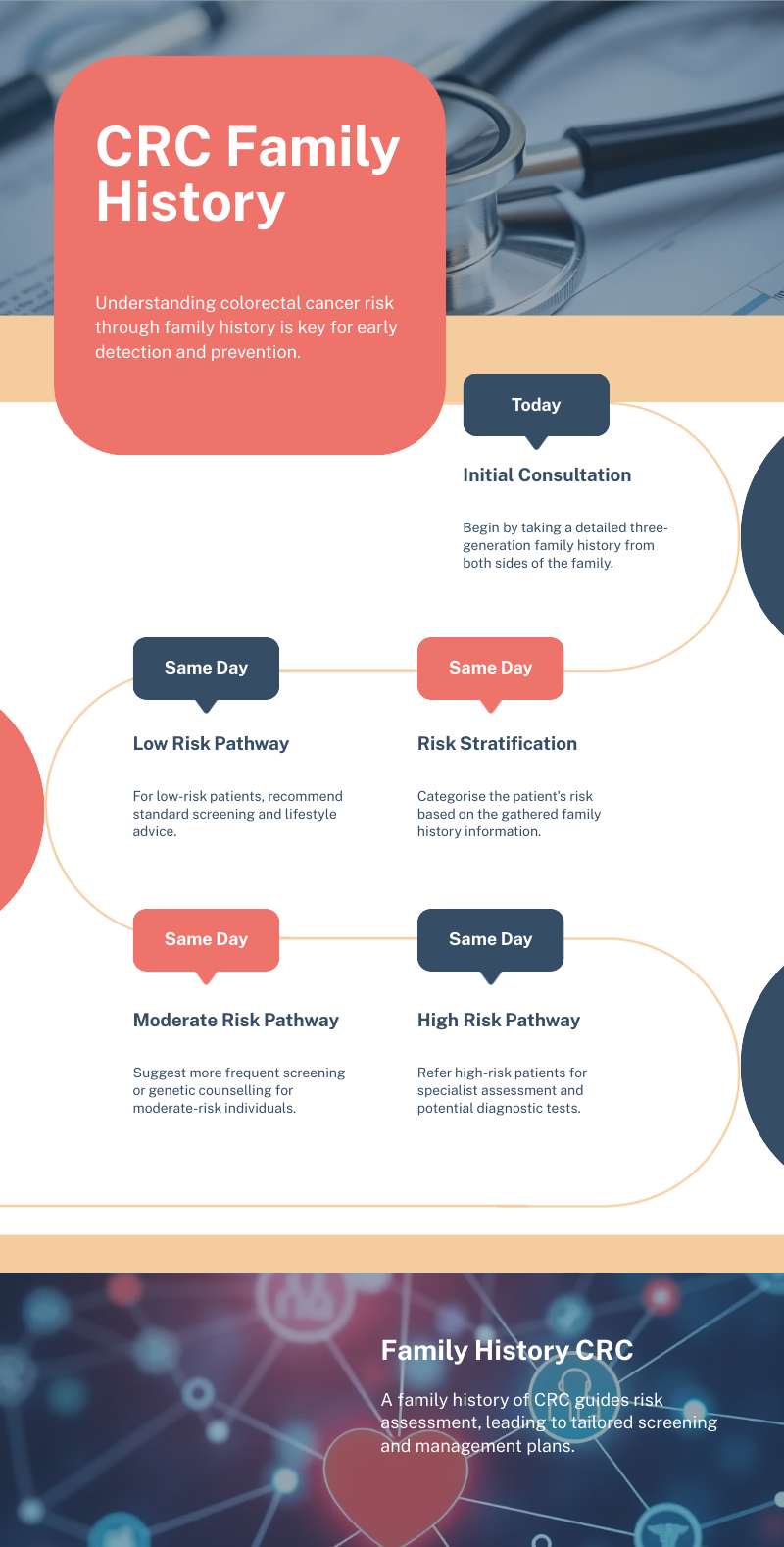
You can assess the risk of a patient based on their family history. The complete national guidelines are available here
Family History and Risk Assessment
-
Who is in this group
One first-degree relative diagnosed with colorectal cancer at ≥55 years.
Recommendations
No routine colonoscopy surveillance required.
Strongly advise participation in the National Bowel Screening Programme (NBSP) when eligible.
Encourage healthy lifestyle choices and prompt reporting of bowel symptoms.
GP takeaway
Manage through NBSP, not colonoscopy.
-
Who is in this group
One first-degree relative with colorectal cancer <55 years, OR
Two first-degree relatives on the same side of the family/whānau with colorectal cancer at any age
(and no Category 3 high-risk features).
Surveillance recommendations
Colonoscopy every 5 years, starting at:
Age 50, OR
10 years younger than the youngest affected relative
(whichever comes first).
If a high-quality colonoscopy has been performed within the last 5 years:
From age 60, the individual may also participate in NBSP.
If polyps are found requiring ongoing surveillance:
Continue colonoscopy per Polyp Surveillance Guidelines (2020).
When colonoscopy surveillance is no longer indicated, return to NBSP.
Important equity note
For Māori and Pacific peoples:
Continue colonoscopic surveillance until age 60
Do not switch to NBSP at 50, despite earlier NBSP eligibility.
GP takeaway
This is a structured colonoscopy programme, FIT testing alone is not sufficient before age 60.
-
Who is in this group (any one of the following)
Known or suspected Lynch syndrome, FAP, or other familial CRC syndromes
One first-degree + ≥2 first/second-degree relatives (same side) with CRC
Two first-degree, or one first-degree + ≥1 second-degree relative with CRC plus:
Diagnosis ≤54 years, or
Multiple CRCs, or
Lynch-associated extracolonic cancer (eg endometrial, ovarian)
CRC in a first-degree relative <50 years with tumour IHC suggesting Lynch
CRC associated with multiple adenomas / polyposis
First-degree relative with multiple colonic polyps meeting polyposis thresholds
Recommendations
Refer to the New Zealand Familial GI Cancer Service (NZFGCS) or a genetic service.
Follow the individualised colonoscopy surveillance plan advised by specialists.
GP takeaway
Do not manage independently, A colorectal cancer specialist can advise on a plan acknowledging a genetics-led risk stratification is often required.